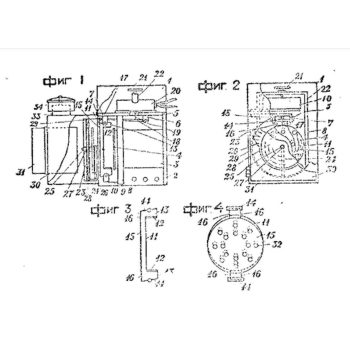
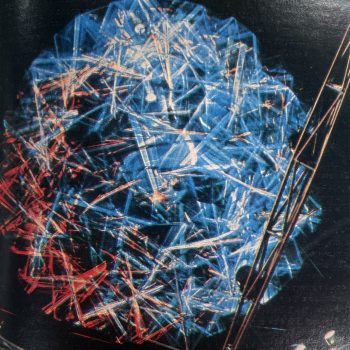
The details of the structure of A. M. Dymshits’ electric light and sound apparatus and the intended scope of its application are currently known from several publications in the press. The notes date back to 1926–27, that is, approximately the same period as the time of work on the project of V.I. Kovalenkov’s instrument, which has a similar two-manual design. “Unlike all previous attempts at light music, which were content with a discordant light accompaniment to ordinary music,” writes Vechernyaya Gazeta correspondent V. Leonov, “A. M. Dymshits’s keyboard instrument provides, first of all, the simultaneous appearance of a coloured beam and sound when a certain key is pressed. The second, extremely important feature of Dymshits’ project is the complete destruction of the usual, single sounding box (a set of strings under the lid of a piano, etc.). The inventor, figuratively speaking, “scatters”, shakes out the contents of this box throughout the concert hall. Control of light, a set of sounding things scattered at any point in space (strings, wooden xylophone sticks, etc., etc., as well as a set of coloured lamps and spotlights spread out over the same space) is carried out at a distance, by wire using an ordinary keyboard” (Leonov V. “Light-music” and “electric orchestra” // Evening newspaper. 1927. May 13).
Links to Third-Party Publications:
Galeev B., Vanechkina I. (On the project of a unique instrument of “spatial music” // Issues in Instrument Studies. Issue 5. Part 2: Articles and materials of the Fifth International Instrumental Conference “Blagodatov Readings” (St. Petersburg, December 6–10, 2004) / executive editor I. V. Matsievsky. St. Petersburg, 2004. p. 157–160; Kolganova O. V. Classification of domestic light and sound instruments of the first third of the twentieth century (From chromotrope to kinemachrome) // The Art and Science of Television. 21.3. pp. 61–117.